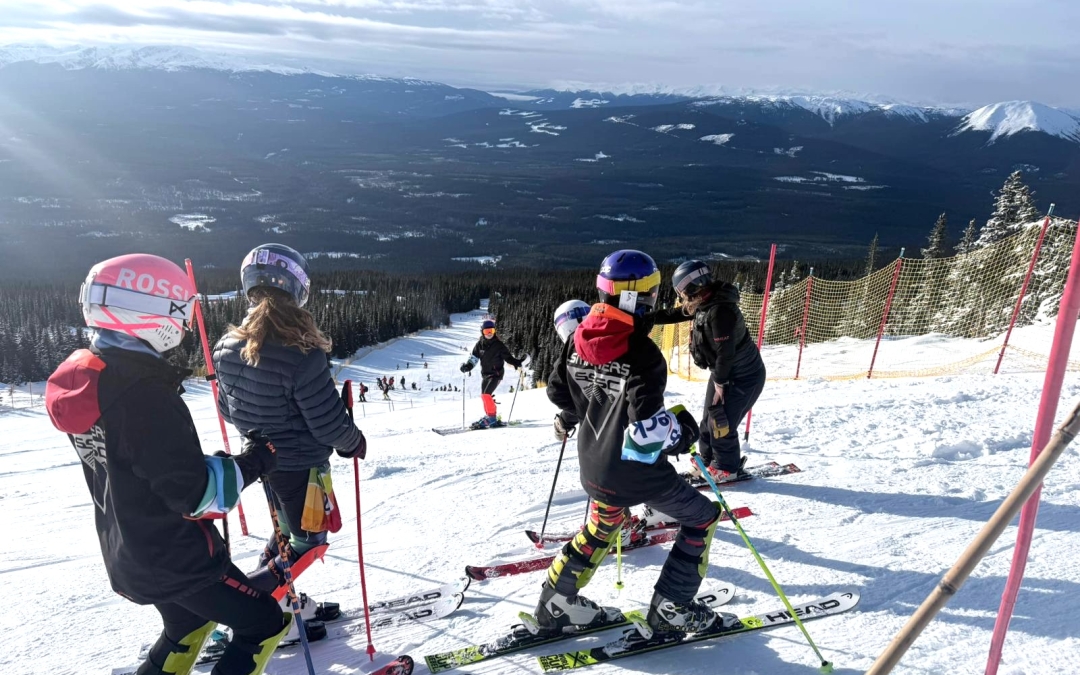
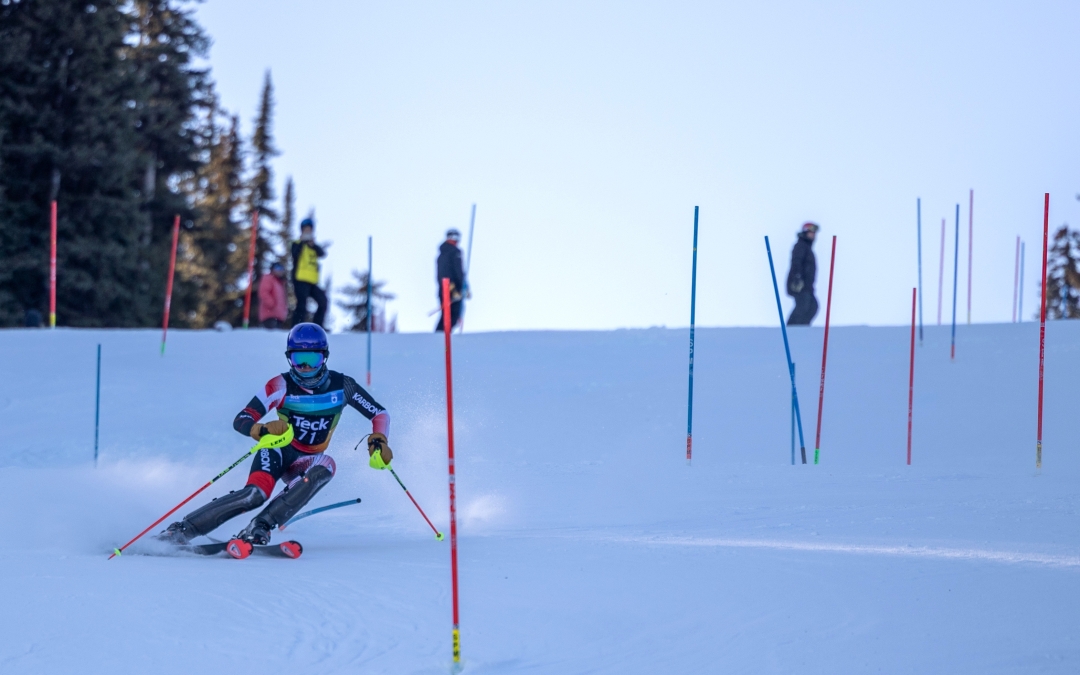
Four clubs from across the North Zone gathered in Smithers last weekend for another action-packed round of Teck North Zone racing at Hudson Bay Mountain.
Athletes from Prince George, Smithers, and Lightning Creek—along with a FIS athlete from the Okanagan Ski Team—tested their skills and season-long progress on the Cinderella race track.
A total of 16 races were completed over two days, with two starts each in slalom and giant slalom for the U12, U14, and U16 categories. The full race schedule provided athletes with valuable competitive experience and opportunities to measure their development.
Two special awards were presented recognizing the “Most Improved” athletes in the North Zone. Markus Kadenbach of Lightning Creek and Peyton Murdoch of Smithers received the honours for their progress and performances.
BC Alpine extends a big thank you to the Smithers Ski & Snowboard Club and its thanks to the dedicated volunteers who made the event possible, including Technical Delegate Graham Cope, Chief of Race Dave Bobb, Chief of Course on Saturday Lee MacNeil, Chief of Course on Sunday Mark MacNeil, Chief of Gates Kate Portman, Chief of Timing Ben Weinstein, Start Referee Andrew Czornohalan, Finish Referee Falko Kadenbach, Race Administrator on Saturday Brittany MacNeil, Race Administrator on Sunday Kat Reid, and Volunteer Coordinator Nicole Czornohalan.
Whistler Mountain hosted the Nancy Greene Skills Event and Janyk Cup, presented by Hincks French Wealth Management at Odlum Brown, last weekend under challenging mid-season conditions.
Morning temperatures ranged from –4°C to –1°C at the Garibaldi Lift Hut and at the top of the course. Saturday brought heavy rain and strong winds, while similar conditions continued on Sunday with added fog. Low visibility persisted throughout the weekend, and a combination of heavy snow, icy patches, and poor visibility led to several safety delays for the U10 slalom and U12 giant slalom on Sunday.
Despite the demanding weather, athletes, coaches, and volunteers embraced the weekend with enthusiasm and team spirit. Saturday’s skills events delivered friendly competition and plenty of smiles, featuring Speed Trap and J-Turn, a combi course, dual slalom, and Start and Skate events for U10s, U12s, and WB’s RDP U14 athletes.
Day two built on that momentum, creating a true race-day experience with a two-run slalom for the U10s and a giant slalom race for the U12s, contested over two combined runs.
Throughout the event, athletes, volunteers, and spectators showed strong support for one another. Whistler Mountain Ski Club athletes performed well, and it was rewarding to see their preparation and hard work reflected on snow.
“It’s great to see the spirit of ski racing alive and well,” said Mike Janyk. “My mom had such a passion for skiing and sport, and so much of her effort was about seeing kids give their best – pushing their limits and smiling while doing it. With a strong team of parent volunteers, that spirit continues. Congratulations to all the participants.”
BC Alpine extends its thanks to the dedicated volunteer team that made the weekend possible. Ryan Duffy served as Chief of Race for the Janyk Cup, with Jamie Finlayson as Chief of Course and Dan Hincks as Chief of Slip. Mark Leng was Start Referee, George Liu Finish Referee, Amie Chu Chief of Timing, Kelsey McDermott Chief of Manual Timing, and Jenny Horlin Chief of Gates. Adam Kendall served as Chief of Race for the Glalom, with Kate Mills Drury as Finish Referee and Jessica Weiss as Chief of Timing. Skills events were supported by Jamie Finlayson as Chief of Combi, Justine Kendall as Chief of Start and Skate, Robin Courcelles as Chief of Speed Trap and J-Turn, David Prchal as Chief of Moguls, and Jenny Horlin as Chief of Dual Slalom.
The Apex Ski Club welcomed young racers on Sunday, hosting a Nancy Greene Ski League event that brought together U6 to U12 athletes from Apex and Big White.
Light snowfall and moderate visibility set the scene on the Okanagan run at Apex Mountain Resort, where conditions held up well for a fun and challenging dual slalom course. With a turn radius sitting between slalom and giant slalom, the course tested skills while keeping the focus on development and enjoyment.
Following the racing, the Apex Ski Club hosted a well-earned post-event barbecue for volunteers and coaches, generously provided by IGS Penticton. The meal was prepared by pro chef Steve Sheridan and capped off a successful day on the hill.
BC Alpine extends its thanks to the volunteers and organizers who made the event possible.
Due to challenging weather conditions at Mt. Washington, the Teck U14 Provincial Championships have been relocated to Apex Mountain Resort. Competition days will be Friday, March 20th, Saturday, March 21st, and Sunday, March 22nd.
Please note on-hill accommodation at Apex is limited, however there are lodging options available in Penticton, about a 30 minute drive from the resort. An updated race notice will be posted on the BC Alpine calendar as soon as possible.
Thank you to the hard-working volunteers at both Mt. Washington Ski Club and Apex Ski Club for your flexibility and understanding as we work to ensure a safe and successful championship event for all athletes and families.
The Dreadnaught crew was at it again last week, delivering a highly successful speed camp and race series at Kimberley Alpine Resort.
See all event images, results and recap video below.
Mostly clear skies, cold temperatures, and a firm race surface created ideal conditions for speed training and competition. Athletes showed impressive development in their speed skills from the start of camp through the final races, particularly among the many first-year participants. The field included a diverse mix of North American and international competitors, adding to the depth and quality of the racing.
The speed camp and race series featured more than 1,000 runs on Kimberley’s legendary race track. The speed camp took place from January 21–23, followed by the FIS Dreadnaught Speed and Night Slalom Series from January 24–30.
Participation continued to grow, with the series recording its largest field across all disciplines—up at least 20 per cent year over year.
BC Alpine extends a sincere thank you to Kimberley Alpine Resort for its continued support of the event, including outstanding grooming and snowmaking.
“This was a truly impressive volunteer group assembled with a deep depth of experience from World Cup speed course crews,” said Gord Reese, Chief of Race for the downhill and super-G events.
Key Volunteers
Chair: Lloyd Steeves & Donna Briggs, Track Manager: Courtney Steeves, Chief of Race (DH & SG): Gord Reese, Chief of Race (Night Slalom): Rob Tupper, Chief of Course: Craig Rusnak, Chief of Timing: Carson Damm
Clear blue skies and frigid temperatures greeted more than 180 racers from across British Columbia at Sun Peaks Resort for Round 1 of the Teck Open race series.
Over four days of racing—two giant slalom (GS) and two slalom (SL) races—athletes took on the OSV race run under ideal conditions. The rock-hard surface was described as “absolutely mint” and required no grooming, holding up exceptionally well from first racer to last to deliver safe and fair competition throughout the field.
“There was some great skiing, learning, and confidence gained each day,” said Jeff Robinson, SPAC Alpine Chair and former national team coach. “There were lots of happy racers, coaches, and parents.”
Photo Gallery (Photos by Maria Davis)
Race Officials
TD: Mark Schwenck Chief of Race: Todd Ring Race Chairman: Wade Rettie Chief of Course: Scott Karpiak Chief of Timing: Kerry Reimer Chief of Gates: Kelly Dye / John Kenney Race Administration: Sara Thomson
BC Alpine extends a sincere thank you to the Race Organizing Committee and the many dedicated volunteers who ensured a smooth and successful event, as well as to Sun Peaks Resort for its continued support of alpine racing.