BC Alpine is pleased to announce that Dustin Koepke has accepted the BC Ski Team Assistant Coach position and is expected to hit the ground running at the end of July when he joins the team for a dryland block in Whistler.
Koepke lives in Lake Country, BC and has been coaching BC athletes since 2007. He started at his home club of Big White as a seasonal coach for 13 to 17 year-old racers. In 2014 Koepke began a 3-year stint with the Grouse Mountain Tyee Ski Club managing the U16 program. In 2017 he moved to the Okanagan Ski Team as Associate Head Coach of a large group of U19 athletes. This led him to his most recent role as Head Coach of the Vancouver Ski Team for the past two seasons.
Dustin comes to BC Alpine with considerable experience running ski teams in BC. He has a good understanding of the BC system and familiarity with most of our current FIS athletes. He believes strongly in ongoing professional development and is currently working on his Advanced Coaching Diploma.
“Adding Dustin to the team couldn’t excite me more,” said BC Alpine VP Johnny Crichton. “I believe in hiring from within and he’s a BC boy who’s put in the work! Dust also has a huge passion for learning and comes into this with a growth mindset attitude. It’s going to be fun!”
“I am very excited to step into this role with the BC Ski Team, an organization I have respected for my entire coaching career,” said Koepke. “Working alongside Morgan (Pridy) and Montana (Molyneux) with a great group of athletes is an opportunity I’m thrilled to take on. I aim to add to the culture of excellence this program provides.”
Dustin Koepke
“We are very excited to have Dustin join the BC Ski Team staff,” said Morgan Pridy, BCST Head Coach. “His work with different clubs and age groups in BC over the past several years has given him excellent experience and perspective within our province’s development system. I think he will be a great addition to the team.”
As he enters his fifth season with the BC Ski Team coaching staff, we are excited to announce that Morgan Pridy has accepted the BC Ski Team Head Coach position! Following in Nick Cooper’s footsteps leaves Pridy with some big shoes to fill, but the two have spent four years together building a strong foundation of professionalism, teamwork and high-performance. Pridy is an obvious great choice for the role, and with Nick not far away, the transition is sure to be smooth.
“We are thrilled about Morgan Pridy stepping into the Head Coach role”, said BC Alpine VP Johnny Crichton. “As a life-long athlete and now coach in BC, he has been training for this role his whole life. Morgan’s vast race experience, his ability to clearly communicate with the athletes and his tireless work ethic really stand out in his long list of attributes.”
“It is very exciting to have the privilege to lead the BC Ski Team and to keep working with this amazing group of athletes”, said Pridy, of his new job. “I look forward to putting all my time and effort into this group and helping the team to earn, have, and be prepared for every opportunity I can.”
MORGAN PRIDY
“Morgan will be assisted by Montana Molyneux, who starts her second year with the team,” added Crichton. “BC Alpine will be looking for a third coach to round out the staff, and they will be tasked with not only the continued success of the men’s team, but also building back a strong women’s team. We are excited for the future!”
Quoting English literature in one breath and commenting how cultural changes could push Canada to the forefront of the ski world with the next, Alpine Canada’s CEO Thérèse Brisson remains optimistic for a brighter future.
Canada’s alpine team endured challenges likely never to be repeated after a season of a few highs and even more lows.
“In terms of athletic performance it was extraordinary,” Brisson said on a video call from her home in Mississauga, Ontario. “But extraordinarily challenging … and Canada had an extreme competitive disadvantage with the travel restrictions and quarantines.”
“You know that Charles Dickens line ‘It was the best of times, it was the worst of times’? It was a bit of that for sure,” she said.
Nine months into the job as the leader of Alpine Canada, Brisson was more than impressed with the team’s ability to adapt.
“The athletes, teams and coaches responded with incredible creativity and resilience,” she said. “I was very proud of the teams and think that we had a great year in terms of athletic performances.”
Brisson cited the continued dominance of the national ski cross team – which garnered a crystal globe (Reece Howden, men’s overall) and the emergence of the next wave of ski cross talent, particularly on the women’s side.
Brisson was equally excited with the athletic performance with the alpine team – even though the group finished 10th in the FIS Nations Cup with roughly 10% of the World Cup points of world-leading Switzerland and less than a third of the total points of the U.S. Ski Team who also had similar travel and Covid-related challenges.
“Holy smokes, some great performances,” she said. “Marie-Michelle Gagnon finding her way in speed on the podium and remarkable performances with Erin [Mielzynski] and Laurence [St-Germain] both moving up their rankings before an Olympic year.”
The Canadian men’s team, which endured an injury-riddled campaign sprinkled with some notable finishes from up-and-coming racers, had a relatively mediocre season with one racer in the top 50 overall World Cup standings (Erik Read, 48th) and three in the top 100. The top overall discipline rank was Erik Read’s 20th in giant slalom and James Crawford’s 24th overall in super-G.
Gold Medal Pathway to 2026 and 2030
According to Brisson, the focus of Alpine Canada remains on effective delivery of a strategic plan and a renewed focus on funding all aspects of this plan.
At a recent national summit, which brought together national and provincial staff, coaches and directors focussed on a “Made for Canada: Strategic Plan 2021-2026.” The four-day zoom meeting covered the plans and strategies of high performance program delivery between the provinces and Alpine Canada.
The talent identification process of NextGen skiers and the “Podium Pathway” of the long-term athlete development model – mixed with current economic and systematic challenges – were discussed by technical and executive leaders.
“Our winning aspiration is to be a world-leading ski racing nation, that is inspired by the passion of Canada’s ski team,” Brisson said. “We are going into an Olympic year poised for podium performances for the first time in a while. And I’m very excited about the next group, we have some younger athletes who will be gaining more experience as they move towards 2026. And then the 2030 group … they will quickly become the NextGen and there’s a group of about 18 athletes there that we’re really excited about.”
According to Brisson, Alpine Canada pays less attention to the FIS Nations Cup – where alpine leaders such as Switzerland and Austria have a substantially larger roster – and focus more on podium performances at major events such as the world championships and Olympic games.
“That for us is world leading,” she explained. “This isn’t as much as a Nations Cup points discussion but I tell you we’re here to win. That’s a bit of a cultural adjustment. We don’t want skiers trying to ‘make the team’ as we want to win and we make no apologies for that.”
Shared vision for a ‘Gold Medal Profile’
With the focus squarely on major event podium finishes, Brisson commented the relationship between Alpine Canada and the provinces is crucial to developing talent from the bottom up.
“For athletes to have podium potential at a major games we know that they need to have the sufficient training, volume and world-class coaching … and they need to be ranked high within their age,” she explained. “How we work with the provinces to enhance their programming [is important] so that they’re ready to continue to make progress.”
“If we’re not capable as a nation of developing athletes to be in the top 20 world ranking their age or younger, the chances of those athletes making a podium later on is something like less than 0.4 percent.”
With Alpine Canada’s selection process targeting athletes at ‘C team’ and above status, the heavy lifting for development of those skiers is driven at the provincial level, which oversees club and regional programming.
“We need to re-orient our system to help athletes progress to that level with the right intensity, coaching and competitive exposure. A lot of that work happens at the provincial level so we need to be clear about what that podium pathway and the gold medal profile looks like.”
Brisson’s vision of the podium pathway is an evidence-based approach which looks at the holistic view of the composition of a top-level skier, and the steps required to reach that level.
“We need to look at all aspects of sport performance from fitness levels to psychological and emotional profiles, lifestyle and habits,” she said. “We need good evidence and data profiles and we see this is as our role as the national organization to help everyone understand what that looks like. Part of the summit was socializing some of that work so that everyone knows and understands the path.”
Brisson also looks to a future with more domestic skiing, bigger and better events and a more cost-efficient process to developing future champions.
“We need to create scale and affordable access to training domestically,” she said. “We have the best training conditions in early winter and spring. If we can create scale and long term partnerships with the key resorts that could really unlock the secret sauce that we need to develop athletes domestically in a way that would be really different and more effective.”
Notable men’s national team staff changes
Nick Cooper – After seven seasons leading the B.C. Ski Team, Cooper was appointed as the head of the men’s Kombi/Europa Cup team. Cooper will be assisted by returning coach Elias Jonsson.
Conrad Pridy – Former World Cup racer who has been coaching with the Whistler Mountain Ski Club for a few years will take on the assistant coach role with the men’s speed group.
Mark Tilston – last season’s men’s head coach has a shift in responsibilities to lead performance sciences as well as program, logistics and budget for the men’s program while providing coaching support across all men’s groups.
John Kucera will continue to lead the men’s speed group assisted by Chris Powers, Conrad Pridy, and Serge Dugas.
Dusan Grasic, men’s technical head coach, and men’s strength & conditioning and assistant coach Agneta Platter have both left the organization to pursue other interests.
Alpine Canada staff changes
Jeff Thompson – added as Vice-President of Domestic Sport Programs and Events. Thompson spent his career in senior leadership positions within Canadian sport. Former head coach with the National Ski Academy in Collingwood, Ont., and Executive Director of Alpine Ontario. Spent the last 18 years with as the Chief Sport Officer for Golf Canada. See full article.
Calgary, AB [June 21, 2021] – Today, Alpine Canada announced its ambitious five-year strategic plan, “Made for Canada – The Future for Ski Racing in Canada,” aimed at making Canada a world-leading ski racing nation in alpine, para-alpine, and ski cross through two Olympic and Paralympic cycles.
Specifically, the strategic plan aims to help Canada top the medal rankings in para-alpine and ski cross and achieve a top-five finish in alpine medal rankings at the Olympic and Paralympic Winter Games by 2026.
“Since I joined Alpine Canada last year, we have sought feedback from hundreds of athletes, coaches, alumni, sponsors, provincial and territorial sport organizations, and our sport and funding partners about the ways that we can build upon Canada’s rich history and tradition of ski racing excellence,” said Therese Brisson, President and CEO of Alpine Canada. “In a year that we celebrated 100 years of ski racing, we took the opportunity to rethink our strategy to ensure it best meets the needs of our athletes and carves a path towards a better future for the broader ski community as we kick off the next century. The plan articulates the vision, priorities, and commitments needed to be a world-leading ski racing nation and achieve our dual mission to increase podium performances and inspire growth in participation and fans.”
The strategic plan addresses our challenges and identifies four “where to play” strategies to help deliver on this mission:
Lead earlier Next Gen athlete development;
Build domestic capacity for ski racing excellence in coaching, member services, & safe sport;
Produce race events that excite Canadians; and
Build brand strength with a broader audience.
“We are optimistic about our future and focused on building capacity and resources to deliver on our ambitions,” said Tim Dattels, Chair of the Board of Alpine Canada. “We see a convergence of dynamics – new leadership, renewed strategic focus, a newly-elected FIS President with a North American growth agenda, and the potential for a 2030 Vancouver/Whistler bid – that could make this one of the most exciting decades for ski racing in Canada, ever.”
Built on the values of excellence, leadership, accountability, respect, and courage, and grounded in our nation-building purpose of powering a nation to peak performance by inspiring Canadians to be at their very best, the strategic plan makes the following commitments to achieve these results:
Develop a pipeline of National Team caliber Canadian coaches;
Identify Next Gen talent earlier at U14 and provide world-class coaching to achieve World Junior Championship podiums;
Build long-term resort partnerships to establish national training hubs for spring and early-winter, on-snow training at scale, domestically;
Lead national high-performance programs that progress junior athletes from World Junior to World Championship podiums;
Rebuild a robust domestic national competition structure that includes the National Championships, NorAm Continental Cups, and a National FIS Canada Cup to support athlete development and grow revenue; and
Develop world class assets and an integrated digital platform to strengthen brand and drive fan and revenue growth.
Alpine Canada has already begun executing upon the initiatives captured in the strategic plan, which can be found with Key Performance Indicators measuring successful delivery here.
Alpine Canada President & CEO Therese Brisson will host Open Town Halls to share the Made For Canada strategic plan with the broader ski community on June 22 at 7pm ET / 5pm MT (English content) and June 28 at 7pm ET / 5PM MT (French content). Click to register for the live video conference .
###
For more information or media inquiries please contact Brianne Law I Director, Brand and Product media@alpinecanada.org I 587-999-4241
About Alpine Canada Alpine Canada is the governing body for alpine, para-alpine, and ski cross racing in Canada, as well as for Canadian ski coaches, providing education, certification, insurance, and compliance with the coaching code of conduct. With the support of valued corporate partners and donors, along with the Government of Canada, Own the Podium, the Canadian Olympic Committee, and the Coaching Association of Canada, Alpine Canada develops Olympic, Paralympic, World Championship, and World Cup athletes to stimulate visibility, inspiration, and growth in the ski community. In 2020-21, Alpine Canada celebrated 100 years of rich tradition in competitive skiing in Canada.
BC Alpine is very excited to announce the naming of 7 athletes to the BC Summer Training Group. This group is already four weeks into centralized dryland training in Whistler, where they are working six days a week on a range of activities from lifting, yoga, biking, hiking, running and more.
BCST Summer Training Group for Summer 2020
Returning team members:
Marcus Athans (2000) – Kelowna BC, Apex Ski Club/Okanagan Ski Team
Heiko Ihns(2002) – Castlegar BC, Red Mountain Racers/Kootenay Zone Team
Tait Jordan (2002) – North Vancouver, Whistler Mountain Ski Club
Nathan Romanin (2001) – Squamish, Whistler Mountain Ski Club
Heming Sola (2003) – Summerland BC, Apex Ski Club/Okanagan Ski Team
Dylan Timm (2002) – Fernie BC, Fernie Alpine Ski Team/Kootenay Zone Team
Additionally, BC Alpine is thrilled to announce that Asher Jordan has made The Canadian National Ski Team for the upcoming season. After an incredibly successful 2020 season that saw Asher win his first NorAm, claim three other overall NorAm podiums and also start three World Cups, he has fully met “C” team criteria. He will join three other former BC Team athletes, Sam Mulligan, Riley Seger and Kyle Alexander, as part of what ACA is calling a “Select Group”. This group will spend time, and have support from, both BC Alpine and ACA, and in Riley’s case his NCAA college team.
We have three members that are moving on from the BC Ski Team, we are sad to see them go, but very proud of what they have accomplished so far, and as they set out on new endeavors we are excited to see what they have in store for the future.
Frances MacDonald will be attending Plymouth State University, taking the nursing program and racing on their NCAA team. Frances commented on her time spent with the BC ski team, My biggest take away from the BC Ski Team were the training and racing opportunities I was given. I felt like the team was held to a very high standard that most teams should follow. The staff showed support through my injury recovery, and made it feel possible to be able to compete at the same level again.
Ella Renzoni will be attending The University of Vermont, studying Environmental Sciences, and racing on their NCAA team. Being on the BCST the past three years has given me the skills that are required to succeed both academically and athletically. The level of intensity that BCST demonstrates reassures me that I am ready and fully capable of succeeding at UVM.
Myles Kowalczyk will be attending the University of British Columbia where he plans to study Psychology, and after a particularly devastating injury last spring Myles has decided to move away from competitive ski racing. After the past year of recovering from injury, I have made the difficult decision to put away the race skis and start an education at UBC. The life experienced that I’ve gained being on the BC Ski Team the last three years has been incredible. Not only was I able to become a skier that I’m proud to be, but the atmosphere, staff and athletes who surrounded me largely shaped who I am as a person today. This is something I wouldn’t trade for the world. I’d like to thank the entire BC Ski Team for creating some of the most memorable times in my life so far, helping me through the hardest challenge I’ve ever faced, and for preparing me to be able to tackle whatever may come next in life!
We have a great group heading into this season, having mostly returning athletes has made the start of our dryland camp very smooth. I’m proud of the dryland program that Morgan (Pridy) has designed and the work he and Ryan (Jazic) are currently putting in with our athletes. I also want to congratulate Asher on the amazing year he had, and wish all our graduating athletes’ success in the future. ~ Nick Cooper, BC Alpine Head Coach
BC Alpine is also happy to announce that in conjunction with our Girls Fast Forward initiative, we will be unveiling a female high-performance plan with the goal of helping more girls in BC make the BCST Criteria. The details of this plan will be released in the fall.
I am pleased that the BCST TG is well into summer training getting extremely fit. I am also fired up about the traction the GFF speaker series is getting from female athletes and coaches around the province. There will be some exciting opportunities for female racers in BC coming this fall. ~ Johnny Crichton, BC Alpine VP
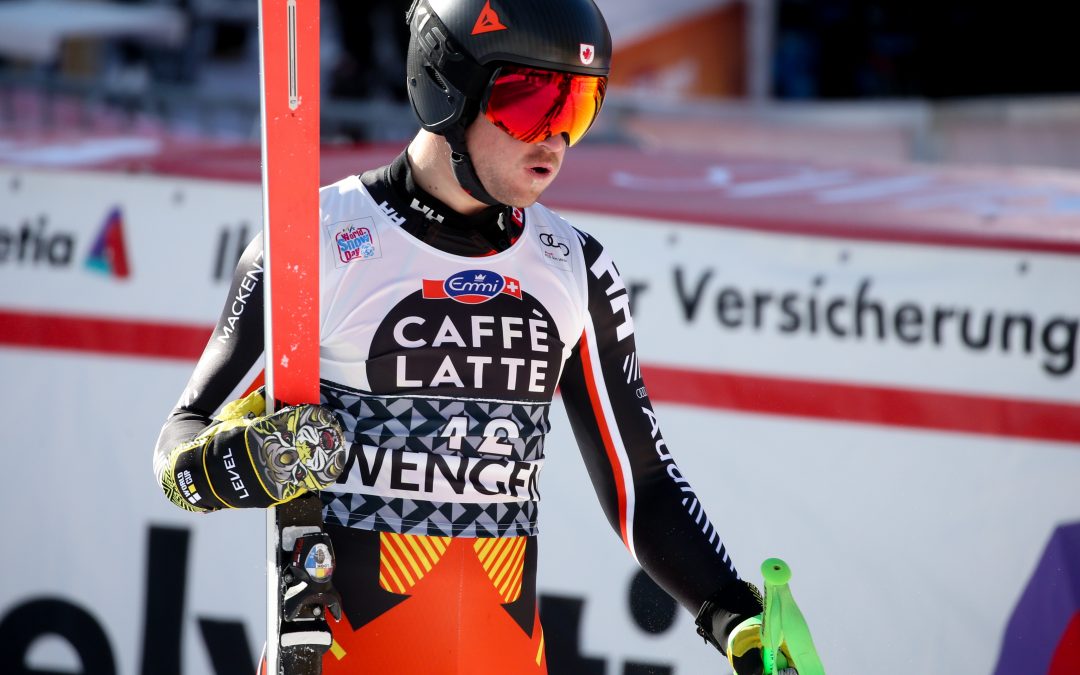
Top photo: Asher Jordan – 2019 BC Ski Team member at 2020 Kitzbuehel World Cup slalom. GEPA pictures/ Patrick Steiner